Drain Snake vs. Auger: What’s the Difference?
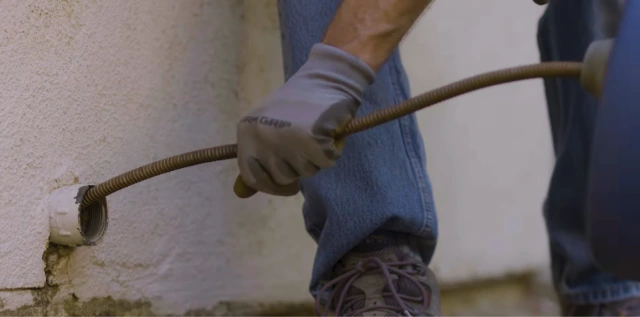
“Drain snake” and “drain auger” often describe the same general type of cable-based cleaning tool. There is no universal rule that a snake is only the cable while an auger is the machine that turns it.
The more useful differences are the tool’s design, cable size, reach, attachment and intended use. A small sink tool, a toilet auger and a professional sewer machine are not interchangeable simply because someone calls each one a snake.
If you are comparing services, our drain snaking and augering service in Summerville explains how equipment selection relates to the fixture, obstruction and available access.
Are a Drain Snake and an Auger the Same Thing?
In everyday drain-cleaning language, the terms overlap. A homeowner might ask for a drain snake, while a product label or technician uses “drain auger,” “hand spinner” or “cable machine.”
“Auger” can also describe a particular cable-end attachment. Manufacturer catalogs include tools and accessories under several of these names, so the wording alone does not establish the equipment’s size or capability.
When booking, describe the problem rather than trying to choose the correct trade term:
- Which fixture is affected?
- Is drainage slow, stopped or backing up?
- Are other fixtures affected?
- Has the problem returned after cleaning?
- Could an object have entered the drain?
Those details are more useful than requesting “an auger instead of a snake.”
Drain Cleaning Tools at a Glance
| Tool or term | What it generally describes | Important distinction |
|---|---|---|
| Hand auger or hand spinner | A compact cable tool operated manually, sometimes with an approved drill option. | Intended applications and reach vary by model. |
| Toilet or closet auger | A tool designed to work through a toilet’s internal trap. | Its guide and protective features differ from ordinary sink tools. |
| Motorized cable machine | Equipment that rotates a drain-cleaning cable. | Machines vary in cable size, attachments and intended pipe sizes. |
| Drum machine | Equipment that stores its cable in a drum. | Drum design alone does not determine the right application. |
| Sectional machine | Equipment that uses connected cable sections. | Cable and machine specifications still need to suit the job. |
| Rooter or rodding service | Broader wording used for mechanical drain clearing. | Ask what equipment and work the service actually includes. |
The name helps identify a category. It does not replace checking the tool’s intended use.
How Do Hand Augers Differ From Motorized Machines?
Hand Augers and Hand Spinners
A hand auger lets the user rotate a cable manually. Some models also allow drill operation when used according to their instructions.
These tools can suit certain smaller drain applications, but their reach and capabilities vary. Do not assume every hand auger reaches the same distance or handles the same blockage.
Check the manufacturer’s approved pipe sizes, operating instructions and fixture applications before use.
Motorized Cable Machines
Motorized equipment also varies. A compact powered sink machine is different from a machine intended for larger drainage lines.
Professional equipment includes several designs rather than one universally stronger version of a hand tool.
More power is not automatically the right solution. The machine, cable and attachment need to suit the pipe and obstruction.
Why Are Toilet Augers Different?
A toilet auger, also called a closet auger, is designed to work through the toilet’s internal trap. It typically has a shaped guide tube and a protective guard intended to reduce contact damage to the porcelain.
That protective feature does not guarantee against damage during incorrect use.
Do not assume that a cable tool intended for sinks is also suitable for a toilet. Check the manufacturer’s stated applications.
If the bowl is rising, stop flushing. A suspected toy, wipe or other lodged object should be mentioned before further attempts are made to push through the blockage.
Why Do Cable Size and Attachments Matter?
Cable diameter, flexibility, length and compatibility affect where equipment can be used. Attachments also perform different tasks.
Depending on the equipment, an attachment may be intended to engage soft debris, retrieve an object or cut suitable obstructions.
A thicker cable is not automatically better, and a cutting head is not automatically appropriate because a blockage is stubborn.
The technician should consider:
- The pipe diameter and layout.
- The access point.
- The likely obstruction.
- Known pipe defects or previous repairs.
- Equipment and attachment compatibility.
Avoid forcing a cable through resistance. Resistance alone does not tell you whether the tool has reached a clog, a bend or another problem.
Can a Drain Snake Remove Tree Roots?
Some professional cable machines have attachments intended for root cutting. That does not mean every drain snake can handle roots or that root cutting is suitable for every affected pipe.
Roots should not be diagnosed from a recurring clog alone. Assessment, previous findings and inspection where practical can help establish what is happening.
Removing roots does not repair the opening through which they entered. If root intrusion is identified, ask whether a separate pipe assessment or repair recommendation is needed.
A root-cutting attachment should not be described as incapable of damaging the surrounding pipe. Tool selection, pipe condition and operation still matter.
What Do “Rooter” and “Rodding” Mean?
“Rooter” and “rodding” are terms you may hear when discussing mechanical drain clearing. Their use can vary between companies and locations.
A service described as rooter work does not necessarily mean roots have been found. Likewise, “rodding” alone does not tell you the equipment size, attachment or section being cleaned.
Ask for a plain-language explanation:
That gives the service name a clear scope.
Does Snaking Clean the Entire Pipe?
Not necessarily. The result depends on the obstruction, equipment, attachment and extent of the work.
Restoring flow does not prove that every deposit has been removed or that the full drainage system is free of defects. Cable equipment can do more than make a small opening, but no single outcome should be assumed from the word “snaking.”
Ask which section was serviced and how the result will be checked.
For suitable deposits, hydro jetting may be another option. It is a different cleaning method, and its suitability also requires assessment.
When Should You Stop Trying a DIY Tool?
Stop and seek guidance if:
- Water rises in another fixture during the attempt.
- Several fixtures are backing up.
- The cable becomes stuck, kinks or meets persistent resistance.
- You notice leaking plumbing.
- Repeated attempts provide only brief improvement.
- You suspect an object that could be pushed farther into the system.
If chemical drain cleaner has already been used, do not add another product or plunge the treated drain. Tell the technician what was used and when.
Follow the tool’s instructions and intended applications. A tool being available to buy or rent does not make it appropriate for every drain.
What Should You Ask Before Booking Drain Snaking?
You do not need to select the machine yourself. You should understand the proposed work.
Ask:
- Which drain or section does the quote cover?
- Why is cable cleaning recommended?
- Is additional access work needed?
- What happens if the first approach does not clear the obstruction?
- Is inspection included or separately priced?
- How will drainage be checked afterward?
- Will additional work require approval?
A clear quote explains the scope rather than relying only on labels such as “snaking,” “augering” or “rooter service.”
Frequently Asked Questions
Is a Drain Auger Stronger Than a Drain Snake?
Not necessarily. The names overlap and do not reliably describe power or capability. Compare the actual tool’s intended pipe sizes, cable, attachments and operating instructions. A toilet auger, compact sink machine and larger sewer machine perform different jobs regardless of the label used.
Can I Use the Same Snake for a Sink and a Toilet?
Do not assume so. Toilet augers have features designed for the toilet’s internal trap and porcelain surface. A tool approved for a sink may not be approved for toilet use. Check its instructions, and stop flushing if water is rising in the bowl.
Does a Recurring Clog Mean I Need a Bigger Auger?
No. Remaining buildup, an incompletely removed obstruction, continued debris entering the drain or a pipe defect may explain the recurrence. A bigger tool does not establish or resolve the cause automatically. Explain how soon the clog returned and ask whether further assessment is appropriate.
Can Snaking Damage a Drain Pipe?
Damage is possible when equipment or operation is unsuitable, particularly where pipe defects are already present. Using the right cable and attachment matters, but it does not create a zero-risk guarantee. Share known repair history and ask how the proposed method suits the affected section.
Do I Need to Know Whether to Request Snaking or Augering?
No. Describe the affected fixtures, symptoms and previous attempts. The provider can explain which equipment is recommended and why. Understanding the proposed scope, expected result and approval process for additional work is more useful than choosing between two overlapping terms.
Need Help Choosing the Right Drain Cleaning Approach?
A slow sink, blocked toilet and shared-line backup can require different equipment. Start by explaining the symptoms rather than choosing a tool by name. Learn about our professional drain snaking and augering in Summerville.
Call (854) 273-0300
Drain Cleaning Summerville
508 Miles Jamison Rd, Summerville, SC 29485
draincleaningsummerville@gmail.com