About Clear Flow Drain Cleaning
We built this business around one job: figuring out why a drain is actually failing before we tell you how to fix it. Ten years working on Summerville’s pipes, from cast iron downtown to PVC in Nexton and Cane Bay, is the difference between a clog that stays gone and one that comes back in months.
We’re Summerville Locals
Clear Flow Drain Cleaning is a local, drain-only operation built specifically for the way Summerville is laid out. Most plumbing companies split their attention across water heaters, fixtures, remodels, and drains all at once. We do not. Drain cleaning, drain repair, and drain replacement are the entire business, for homes and businesses from the older streets near downtown to the newest construction in Nexton and Cane Bay.
10+ Years Learning What’s Actually in the Ground Here
Summerville is not one plumbing market, and treating it like one is exactly where most drain problems get misdiagnosed. Over more than 10 years of working on drains across this town, one pattern has held true: the age and location of a home tells you more about its likely pipe problem than almost anything else.
Older Homes: Cast Iron, Clay, and Orangeburg Pipe
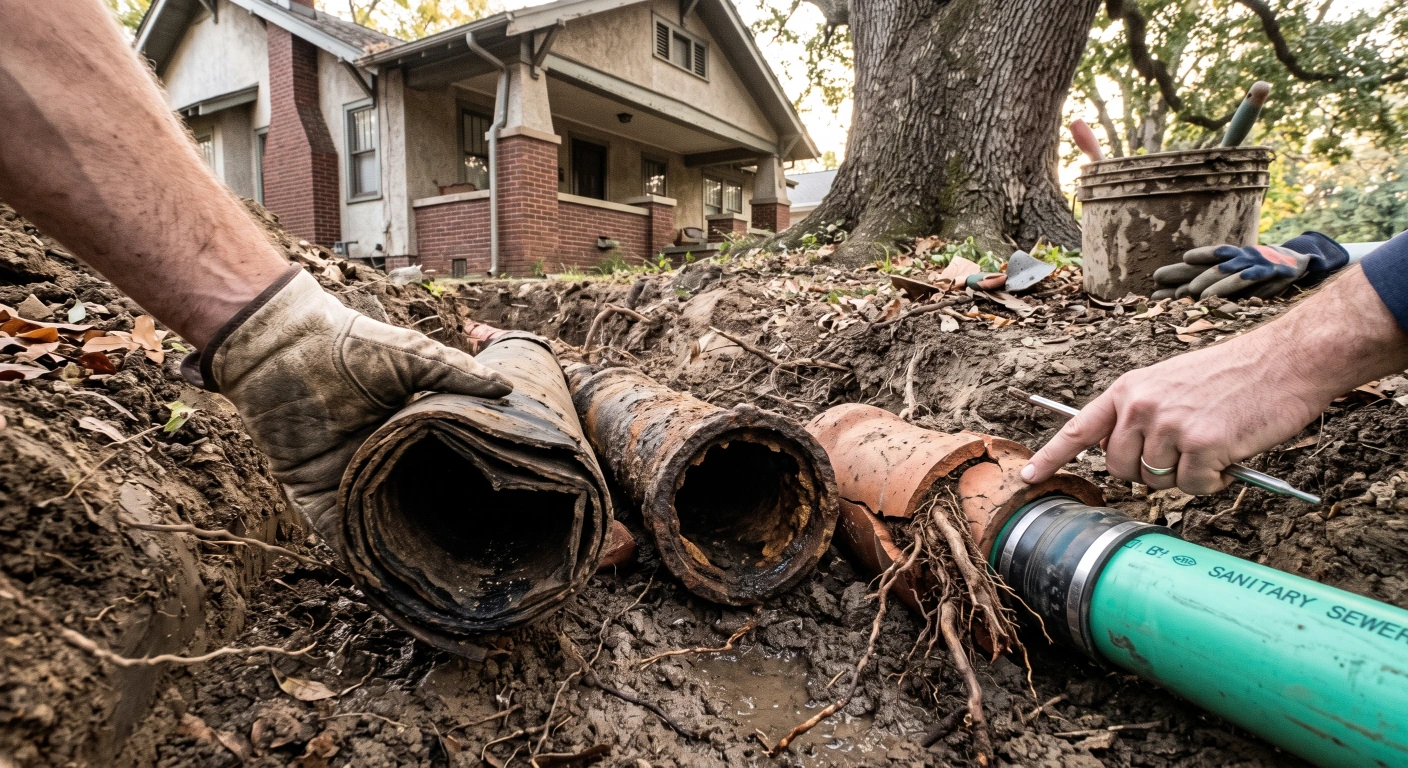
Older homes near downtown and in established neighborhoods commonly run on cast iron, clay, or Orangeburg pipe, a tar paper composite common from the 1940s through the 1970s that is especially prone to collapse. Cast iron narrows from the inside as it scales up over decades of mineral deposits and corrosion, until normal household use alone is enough to trigger a clog. Clay pipe has joints every few feet, and those joints are exactly where tree roots find their way in, chasing moisture and oxygen through even a hairline crack. Once a root has found its way into a line, it keeps growing back after a section is cleared unless the intrusion itself is removed.
Newer Homes: PVC in Nexton, Cane Bay, and Carnes Crossroads
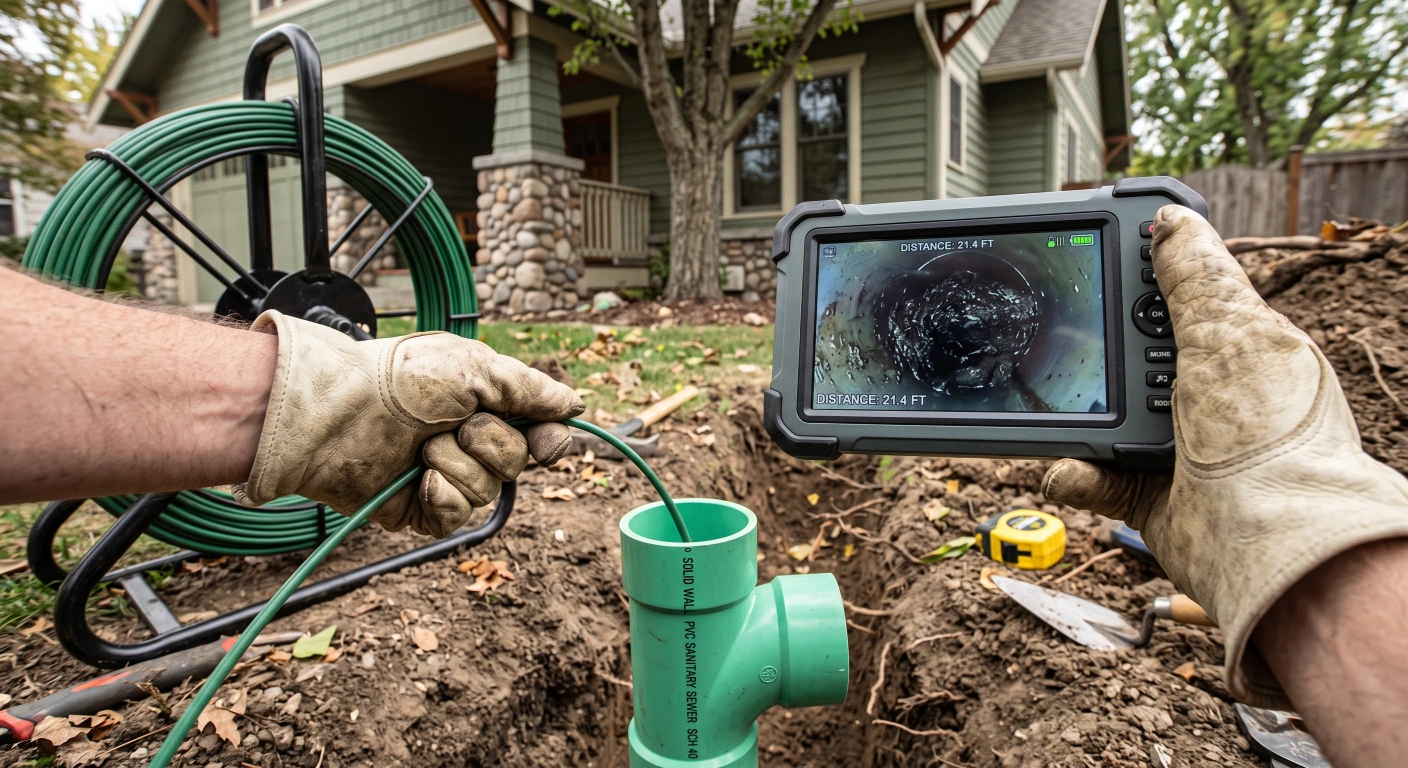
Newer homes in Nexton, Cane Bay, and Carnes Crossroads run on PVC, a material that does not corrode or invite roots the way older pipe does. When these newer lines clog, the cause is almost always something introduced during use or left behind during construction, grease, wipes, or debris, rather than the pipe itself failing.
Sandy Soil and Hard Water
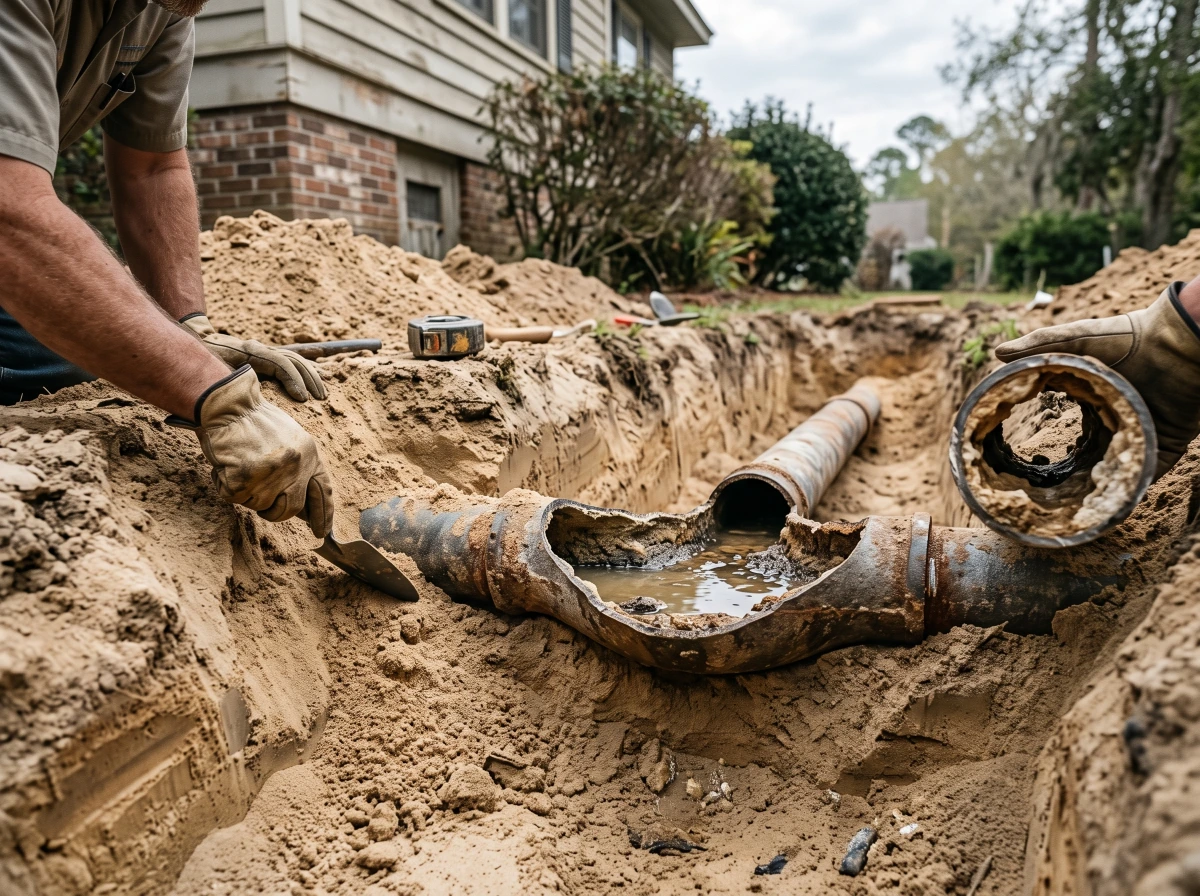
The Lowcountry’s sandy soil adds another variable most out-of-town companies never account for. Ground movement over years can create low sag points in buried pipe, called bellies, where standing water and solids collect even after a line has been fully cleared, which is why a belly causes the same clog to return again and again in the exact same spot. Hard water across the region adds mineral scale on top of that, speeding up narrowing inside older metal pipe faster than it would in an area with softer water.

Hurricane Season Risk
During hurricane season, which runs June through November, heavy rainfall on already saturated ground raises backup risk regardless of whether a storm actually makes landfall here. That risk is not limited to named storms. An ordinary summer thunderstorm on ground that is already soaked can push a marginal drain line past its limit.
Two Systems, One Town
Sanitary Sewer
Household drains connect to the sanitary sewer system, which carries wastewater to a treatment facility. That system in Summerville is owned and operated by the Summerville Commissioners of Public Works.
Stormwater Drainage
Stormwater drainage, which handles rain runoff from roads, roofs, and yards, is an entirely separate system managed by the Town of Summerville’s Public Works Department. A backed up household drain and a flooded yard after heavy rain are not the same problem, they run through different infrastructure and get fixed differently.
How We Diagnose Before We Ever Recommend a Fix
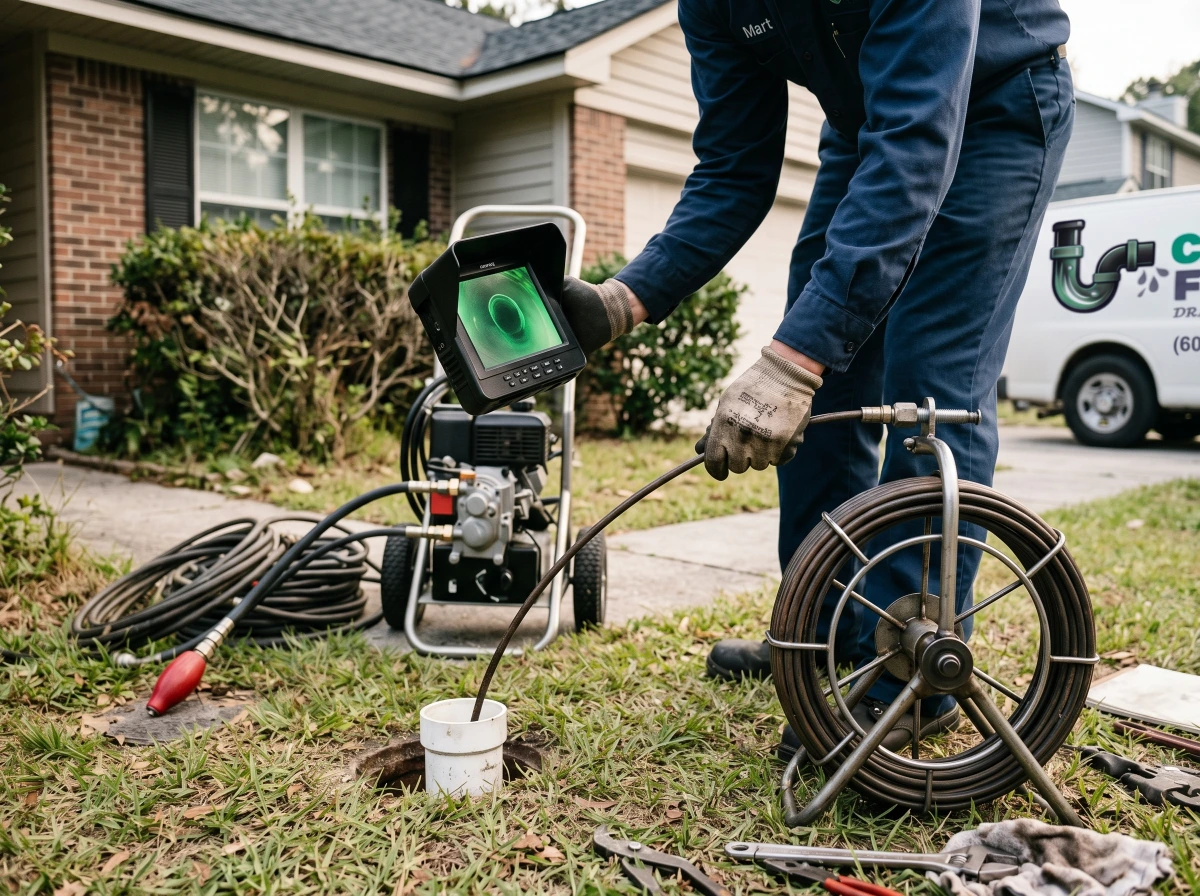
We do not quote a job over the phone based on a description alone. A camera inspection, when the situation calls for it, shows us exactly what is happening inside the line: a soft clog, a scale ring narrowing the pipe, or root material that has worked its way through a joint. That finding decides the method we use, not the other way around.
Snaking and Augering
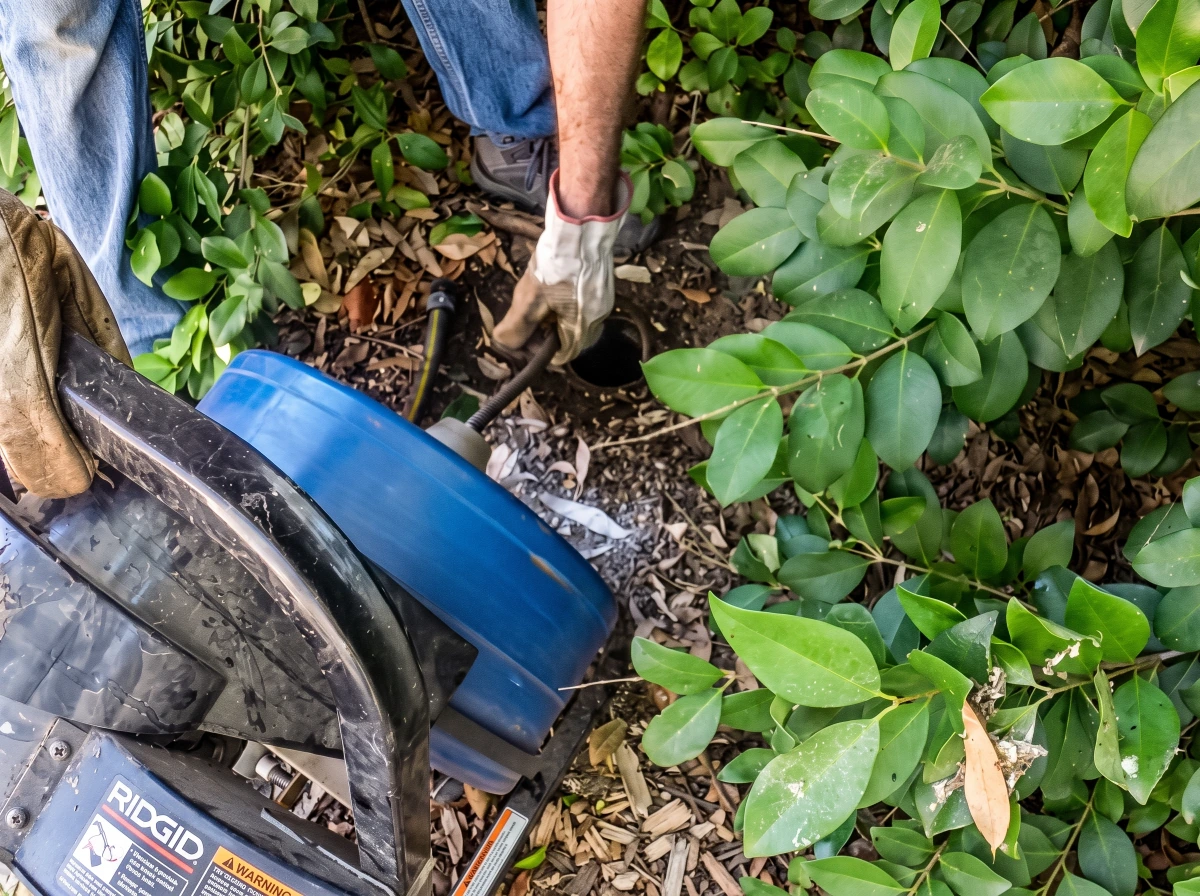
For soft, localized clogs close to a fixture, mechanical snaking and augering clear the obstruction directly, effective on the large majority of straightforward blockages, though it clears what’s in the way rather than restoring the full condition of the pipe wall.
Hydro Jetting
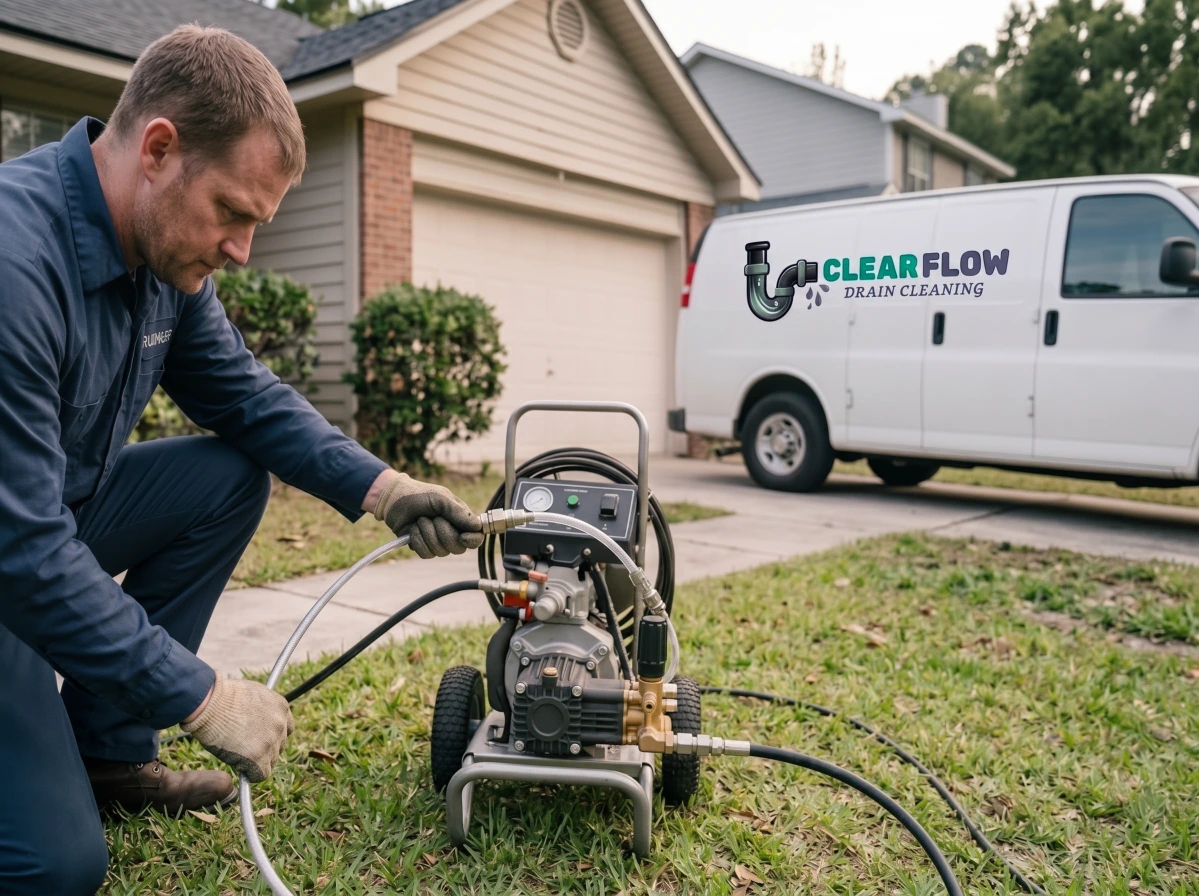
For heavier buildup, root intrusion, or a drain that keeps clogging in the same spot, we use hydro jetting, which pressurizes water up to 4,000 PSI through the line. A forward-facing jet breaks up the blockage while a rear-facing jet scours the walls of the pipe as it moves forward, which is why hydro jetting restores a line closer to its original condition instead of just pushing debris further down. Done properly, that difference is also why hydro jetting results typically hold six to twelve months before the same buildup returns, meaningfully longer than cabling alone.
When Cleaning Isn’t the Right Fix
If a camera shows a cracked, collapsed, or badly bellied pipe, no amount of cleaning fixes that. We say so directly, explain what the camera found, and lay out repair or replacement as the honest next step, rather than selling a cleaning we already know will only buy a few months.
What This Approach Actually Means for You
- We inspect before we price, so the quote reflects the actual problem, not a guess made over the phone
- We match the pipe material and property age to the likely cause before we even arrive
- We tell you when a repair is enough and when replacement is the better long-term call, and explain the reasoning either way
- We treat a restaurant’s grease trap line and a homeowner’s bathroom drain with the same standard of diagnosis
Residential and Commercial, Treated Equally
A restaurant in Nexton dealing with grease trap buildup is a different job than a house near Main Street dealing with a slow bathroom drain, but neither one is treated as secondary to the other here. Commercial kitchens generate far more fat, oil, and food waste per day than any household kitchen does, which is why grease trap and grease line maintenance needs to run on a set schedule rather than waiting for a backup to force the issue.
We work on single-family homes, multifamily buildings, restaurants, retail, and office properties across Dorchester, Berkeley, and Charleston counties, since Summerville’s own footprint spans parts of all three.
Certifications & Standards
Clear Flow Drain Cleaning is licensed and insured to work in Summerville and the surrounding area, and our technicians hold relevant industry certifications for drain and sewer line work.
“Find the actual cause, explain it in plain language, and fix it with the method that fits, not the one that’s fastest to sell.”— Our Approach in One Sentence
Why Does Clear Flow Only Do Drains?
Focusing on one thing means our equipment, training, and diagnostic process are all built around drains specifically, not spread thin across water heaters, fixtures, and general repairs. A company that handles fifteen different services cannot know Summerville’s pipe materials, soil behavior, and root intrusion patterns the way a drain-only company can, and that difference shows up in how accurately a problem gets diagnosed the first time.
Where We Work
Summerville and the surrounding Lowcountry, including Nexton, Cane Bay, Carnes Crossroads, and the neighborhoods around downtown, across Dorchester, Berkeley, and Charleston counties. Whether the property is an older home near Main Street built on cast iron or clay, or a new build in one of Summerville’s growing developments, we bring the same diagnostic approach and adjust it to what’s actually in the ground.
Have a Question or a Drain That Needs Attention?
Have a question or a drain that needs attention? Call us at (854) 273-0300.